Transmission Slipping in Arlington, TX?
Slipping can come from a solenoid, old fluid, or something deeper — it doesn't automatically mean a rebuild. The only way to know which is an accurate diagnosis, not a guess.
Why Is My Transmission Slipping?
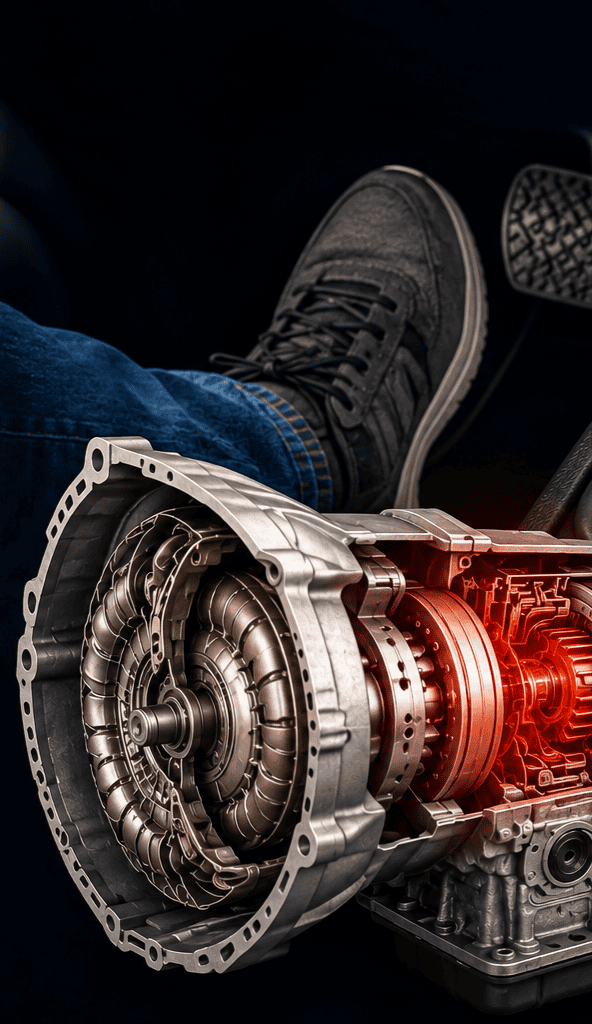
Slipping usually means the transmission is briefly losing its hydraulic or mechanical grip — RPMs rise, but power doesn't reach the wheels the way it should. Common causes include low or degraded fluid, a failing shift solenoid, torque converter wear, or worn internal clutches and bands. Some of these are straightforward repairs. Others point to deeper internal wear.
The symptom is the same either way — a moment where the engine revs without the vehicle responding. What's actually causing it is what determines the fix, and that's not something to guess at from the driver's seat.
What Transmission Slipping Feels Like
Drivers describe slipping differently depending on when and how it shows up. These are the most common versions we hear about in Arlington.

RPM Climbs, Speed Doesn't Follow
The engine revs higher than it should for the speed you're actually going.

Hesitation Before It Catches
A pause between pressing the gas and actually feeling the vehicle respond.

Unexpected Gear Changes
Shifting up or down on its own, or bouncing between gears without a clear reason.

Loss of Power Under Load
Noticeably weaker pulling power going uphill, merging, or towing.
Common Possible Causes
A transmission slips when it briefly loses hydraulic pressure or mechanical hold. Possible causes can include:
- Low or degraded transmission fluid
- A worn or stuck shift solenoid
- Torque converter wear or lock-up faults
- Worn internal clutches or bands
- Contaminated or burnt fluid
- A failing speed or pressure sensor
This isn't a diagnosis of your specific vehicle — it's the range of things a slip can trace back to. Some of these are quick, inexpensive fixes. Others mean real internal wear. The symptom alone doesn't tell you which; a scan and inspection does.

Low or Degraded Fluid
The most common and often the least expensive cause to correct.

Worn or Stuck Solenoid
An electronic component that directs fluid — a common, repairable cause.

Torque Converter Wear
Can cause a shudder or slip, especially around 30–45 mph.

Internal Clutch or Band Wear
Deeper mechanical wear — usually the difference-maker for a rebuild.
Can I Keep Driving With a Slipping Transmission?
For a short time, often yes — but it's worth getting looked at soon. Occasional, mild slipping isn't usually an emergency, and plenty of drivers get to a shop safely after noticing it. The risk is what continued driving can do to a cause that was originally repairable: low fluid can lead to overheating, and overheating can accelerate wear on clutches and bands that were otherwise fine.
Frequent slipping, a burning smell, or the transmission struggling to hold a gear at all are signs to get it looked at promptly rather than waiting. The safest approach is simple: the sooner it's diagnosed, the more likely the fix is a repair rather than a rebuild.
How We Diagnose a Slipping Transmission
We don't start by quoting a rebuild. We start by finding out what's actually happening — a scan for stored codes, a check of fluid condition and level, and a road test to confirm when and how the slip occurs. Once we know the real cause, we explain it in plain language and recommend the fix that actually fits.
Does a Slipping Transmission Always Mean a Rebuild?
Not necessarily. Slipping can come from several different causes, and not all of them involve significant internal damage. A solenoid, sensor, or fluid-related slip is often a straightforward repair.
A rebuild becomes the right call when the diagnosis actually points to worn clutches, bands, or other internal components — not just because the symptom is slipping. That's the entire reason diagnosis comes first: it's the only way to tell a repairable cause from one that isn't.
Potential Solutions
Every path starts in the same place: an accurate diagnosis.
Diagnostics
The step that determines which path below actually makes sense — before any money is spent on parts or labor.
Repair
Appropriate when a specific, identifiable problem is found and the rest of the transmission is in good condition.
Rebuild
Appropriate when internal wear or damage goes beyond a single repairable part.
Replacement
Appropriate when replacing the transmission is the better technical or economic solution.
Transmission Slipping FAQ
Can a slipping transmission be fixed without a rebuild?
Yes, in many cases. Slips caused by fluid condition, a solenoid, or a sensor are often repairable directly. Whether yours qualifies depends on what the diagnosis finds.
Will a fluid change fix slipping?
Sometimes, but not always. If low or degraded fluid is the actual cause, a proper fluid service can resolve it. If the slip is coming from a worn part, a fluid change alone won't fix it.
Is transmission slipping dangerous to drive with?
Mild, occasional slipping is usually low-risk short term. Frequent slipping, overheating, or a burning smell are signs to get it looked at promptly rather than continuing to drive on it.
How much does it cost to fix a slipping transmission?
It depends entirely on the cause. A fluid or solenoid fix costs far less than a rebuild. We won't know which applies to your vehicle until we've actually diagnosed it.
Does slipping always get worse over time?
Not always, but it can. Some causes stay mild for a while; others accelerate wear the longer they go unaddressed. Getting it checked sooner keeps more repair options on the table.
What's the difference between slipping and shuddering?
They're related but distinct. Slipping is RPMs rising without matching acceleration; shuddering is a vibration, often tied to torque converter wear. The two can share causes, but not always.
Don't Guess What's Wrong With Your Transmission.
Diagnose It First.